





Broker Check
Jose M Borro II
Jose M Borro II
AirMar Wealth Management Financial Planner
https://www.prudential.com/advisor/jose-borro (561) 206-5366

Jose M. Borro II, CPFA®
Founder, AirMar Wealth Management

Born and raised in Naples, Florida, Jose is the son of Cuban immigrants whose sacrifices shaped his values: freedom, family, and opportunity. That legacy is the heart of everything we do at AirMar.

After more than a decade in the financial industry, Jose founded AirMar Wealth Management to offer something often missing in finance—human advice, grounded in trust, values, and lived experience. Every strategy we create is designed around one central truth: your life comes first.

When he’s not helping clients shape their futures, Jose is enjoying his own—boating along the Atlantic with his wife Lauren, adventuring with their son Judah, and soaking in the Florida lifestyle that inspires the AirMar name.

Licenses & Credentials:

  • FINRA Series 7 & 66 held with LPL Enterprise
  • Florida 2-15 Life, Health & Variable Annuity License
  • Certified Plan Fiduciary Advisor (CPFA®)

Understanding the SECURE Act 2.0

Retirement
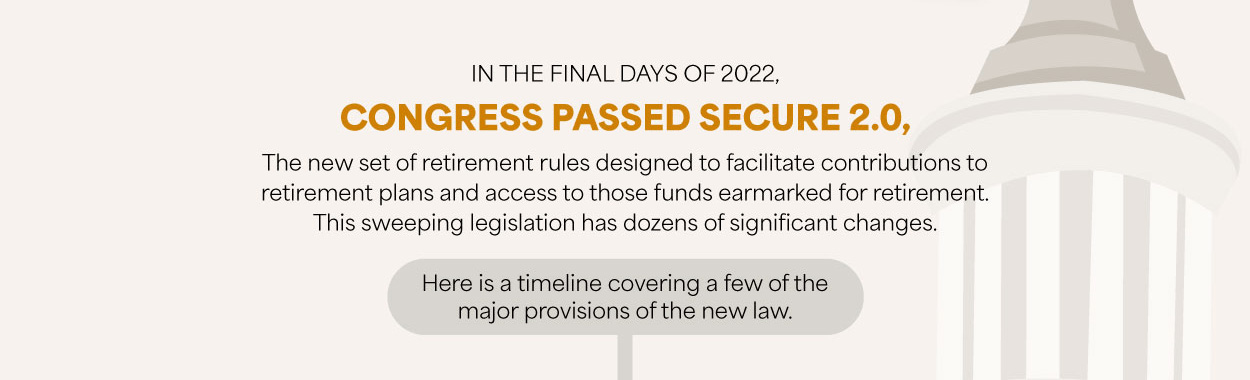
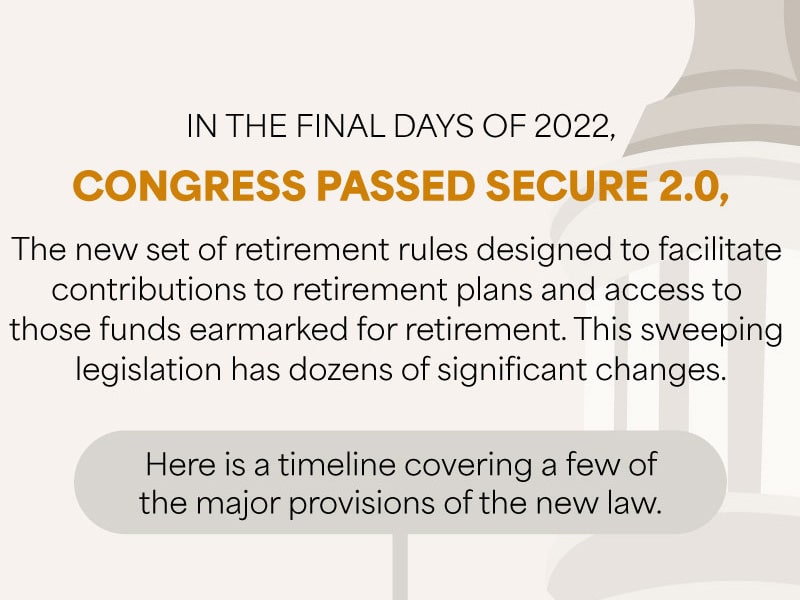
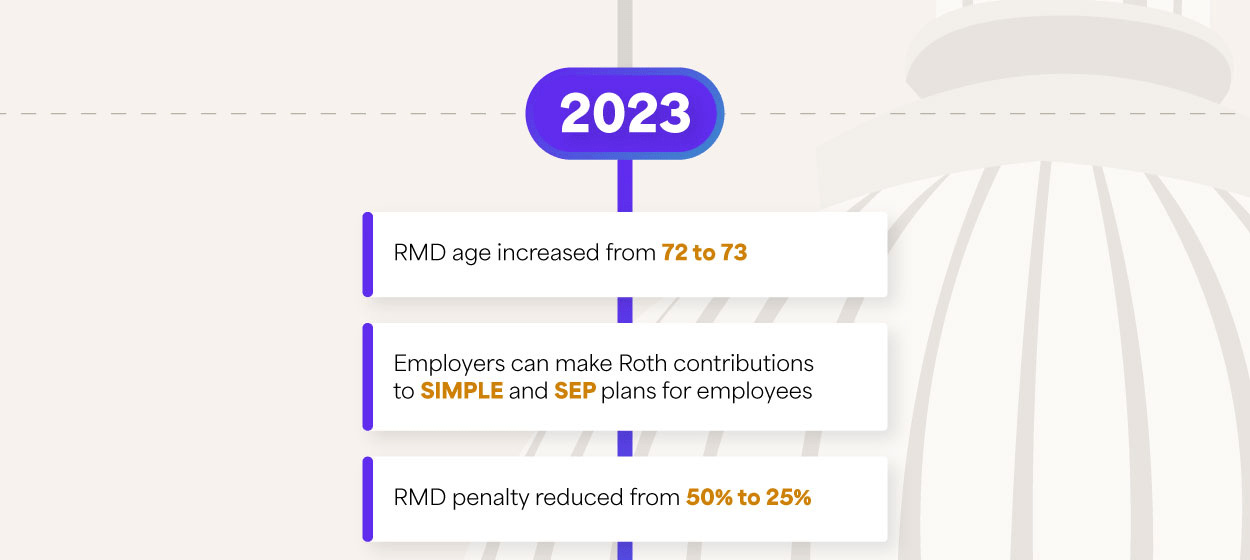
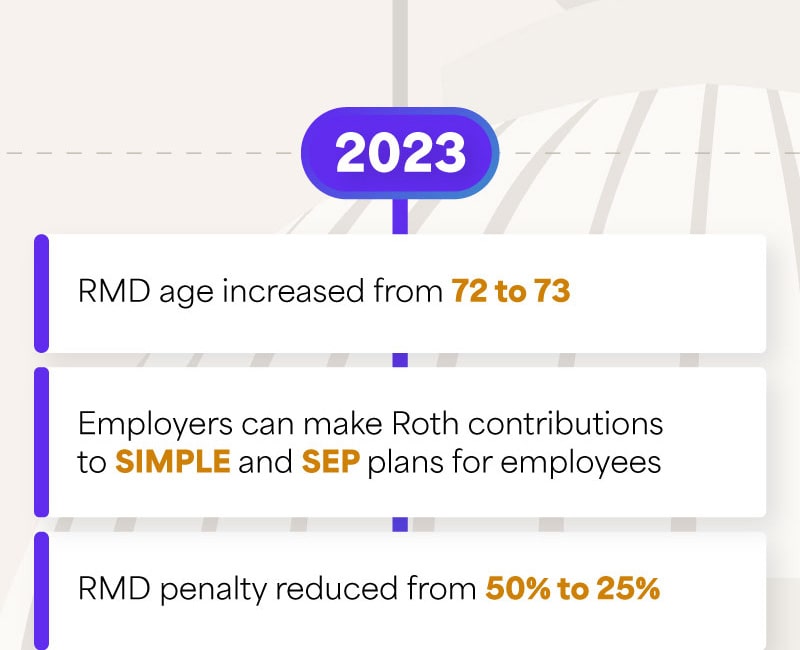
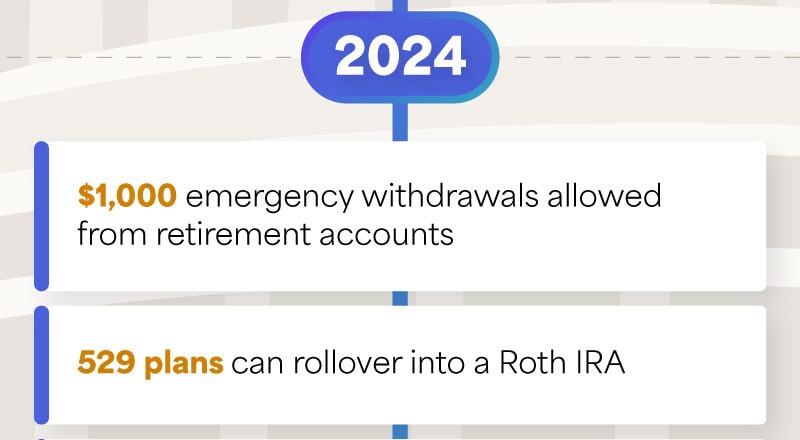
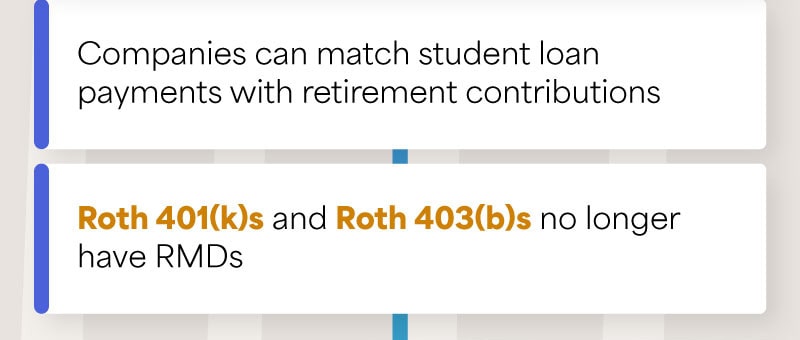
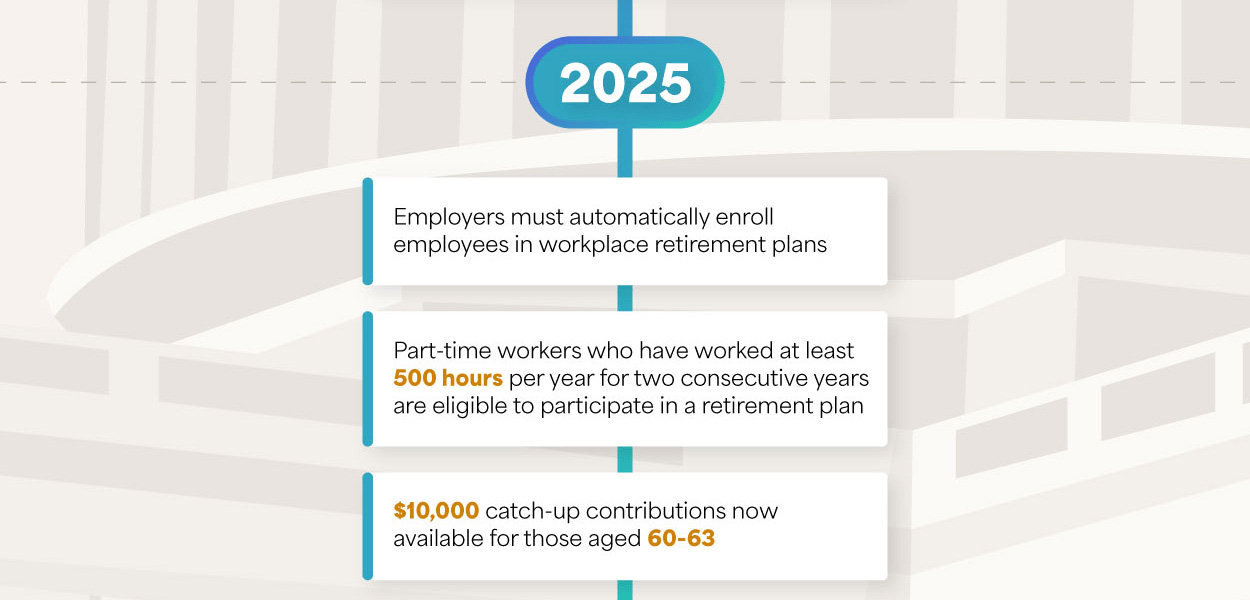
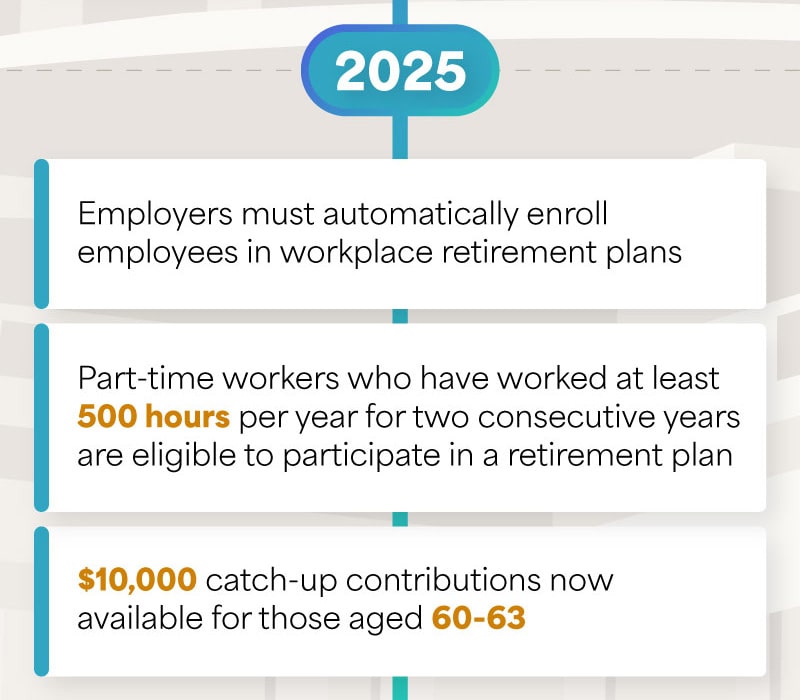
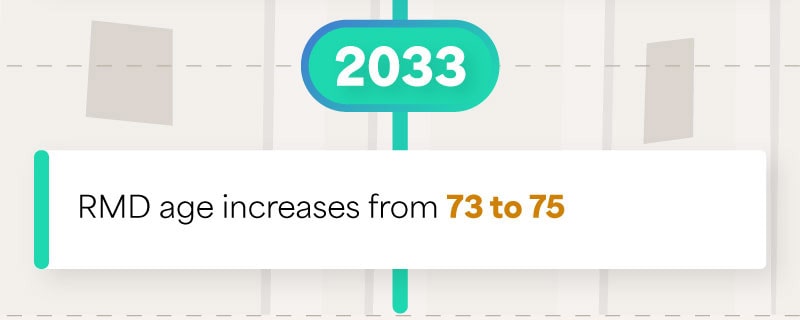
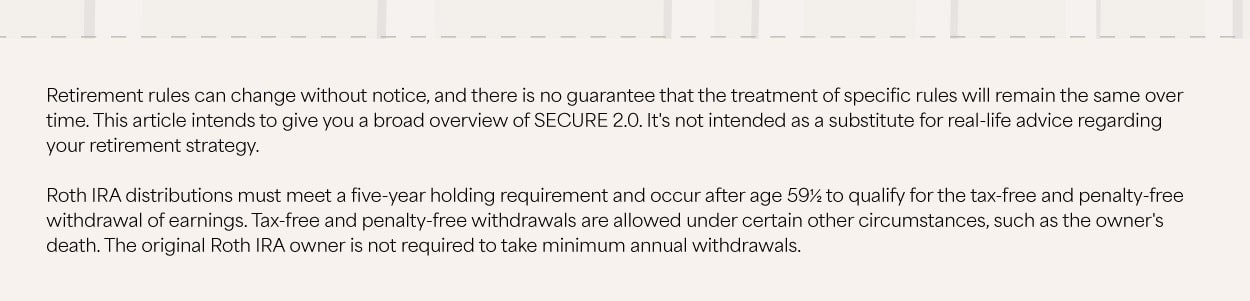
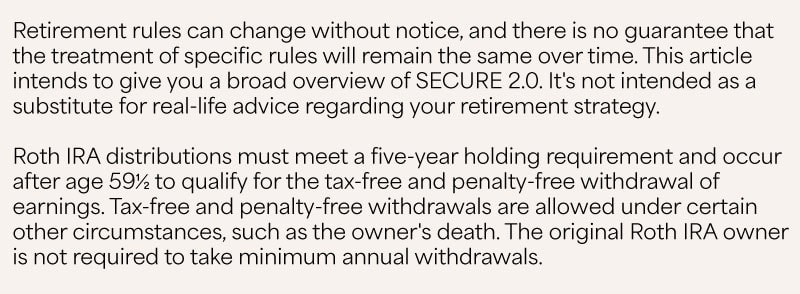
This infographic is composed of a timeline that moves vertically down the page starting in 2023 and ending in 2033. The title is placed next to a vector image of the US Capitol spire and reads: Secure Act 2.0.This infographic is composed of a timeline that moves vertically down the page starting in 2023 and ending in 2033. The title is placed next to a vector image of the US Capitol spire and reads: Secure Act 2.0.Moving down the US Capital spire, underneath the title is text that reads: In the final days of 2022, Congress passed SECURE 2.0, the new set of retirement rules designed to facilitate contribution to retirement plans and access to those funds earmarked for retirement. This sweeping legislation has dozens of significant changes; here is a timeline covering a few of the major changes of the new law.Moving down the US Capital spire, underneath the title is text that reads: In the final days of 2022, Congress passed SECURE 2.0, the new set of retirement rules designed to facilitate contribution to retirement plans and access to those funds earmarked for retirement. This sweeping legislation has dozens of significant changes; here is a timeline covering a few of the major changes of the new law.Moving down the US Capitol dome, the timeline begins with 2023 and lists six changes: RMD age increased from 72 to 73. Employers can make Roth contributions to SIMPLE and SEP plans for employees. RMD penalty reduced from 50 percent to 25 percent.Moving down the US Capitol dome, the timeline begins with 2023 and lists six changes: RMD age increased from 72 to 73. Employers can make Roth contributions to SIMPLE and SEP plans for employees. RMD penalty reduced from 50 percent to 25 percent.Small business credit for establishing a workplace retirement plan increased from 50 percent to 100 percent. Over 50 catch-up contribution increased from 6,500 dollars to 7,500 dollars. Qualified Charitable Donation limit indexed for inflation.Small business credit for establishing a workplace retirement plan increased from 50 percent to 100 percent. Over 50 catch-up contribution increased from 6,500 dollars to 7,500 dollars. Qualified Charitable Donation limit indexed for inflation.Continuing down the US Capitol dome, the timeline progresses to 2024 and lists four changes: 1,000 dollars emergency withdrawal from retirement accounts. 529 plans can rollover into a Roth IRA.Continuing down the US Capitol dome, the timeline progresses to 2024 and lists four changes: 1,000 dollars emergency withdrawal from retirement accounts. 529 plans can rollover into a Roth IRA.Companies can match student loan payments with retirement contributions. Roth 401(k)s and Roth 403(b)s no longer have RMDs.Companies can match student loan payments with retirement contributions. Roth 401(k)s and Roth 403(b)s no longer have RMDs.Closer to the base of the US Capitol dome, the timeline transitions to 2025: Employers must automatically enroll employees in workplace retirement plans. Part-time workers who have worked at least 500 hours per year for two consecutive years are eligible to participate in a retirement plan. 10,000 dollar catch-up contributions now available for those aged 60-63.Closer to the base of the US Capitol dome, the timeline transitions to 2025: Employers must automatically enroll employees in workplace retirement plans. Part-time workers who have worked at least 500 hours per year for two consecutive years are eligible to participate in a retirement plan. 10,000 dollar catch-up contributions now available for those aged 60-63.At the base of the US Capitol dome, the timeline reaches 2033 with one final change: RMD age increases from 73 to 75.At the base of the US Capitol dome, the timeline reaches 2033 with one final change: RMD age increases from 73 to 75.The bottom of the infographic depicts part of the US Capitol dome, largely obstructed by text that reads: Retirement rules can change without notice, and there is no guarantee that the treatment of specific rules will remain the same over time. This article intends to give you a broad overview of SECURE 2.0. It's not intended as a substitute for real-life advice regarding your retirement strategy. Roth IRA distributions must meet a five-year holding requirement and occur after age 59½ to qualify for the tax-free and penalty-free withdrawal of earnings. Tax-free and penalty-free withdrawals are allowed under certain other circumstances, such as the owner's death. The original Roth IRA owner is not required to take minimum annual withdrawals.The bottom of the infographic depicts part of the US Capitol dome, largely obstructed by text that reads: Retirement rules can change without notice, and there is no guarantee that the treatment of specific rules will remain the same over time. This article intends to give you a broad overview of SECURE 2.0. It's not intended as a substitute for real-life advice regarding your retirement strategy. Roth IRA distributions must meet a five-year holding requirement and occur after age 59½ to qualify for the tax-free and penalty-free withdrawal of earnings. Tax-free and penalty-free withdrawals are allowed under certain other circumstances, such as the owner's death. The original Roth IRA owner is not required to take minimum annual withdrawals.

No pressure, no jargon, just a real conversation about what matters to you.